

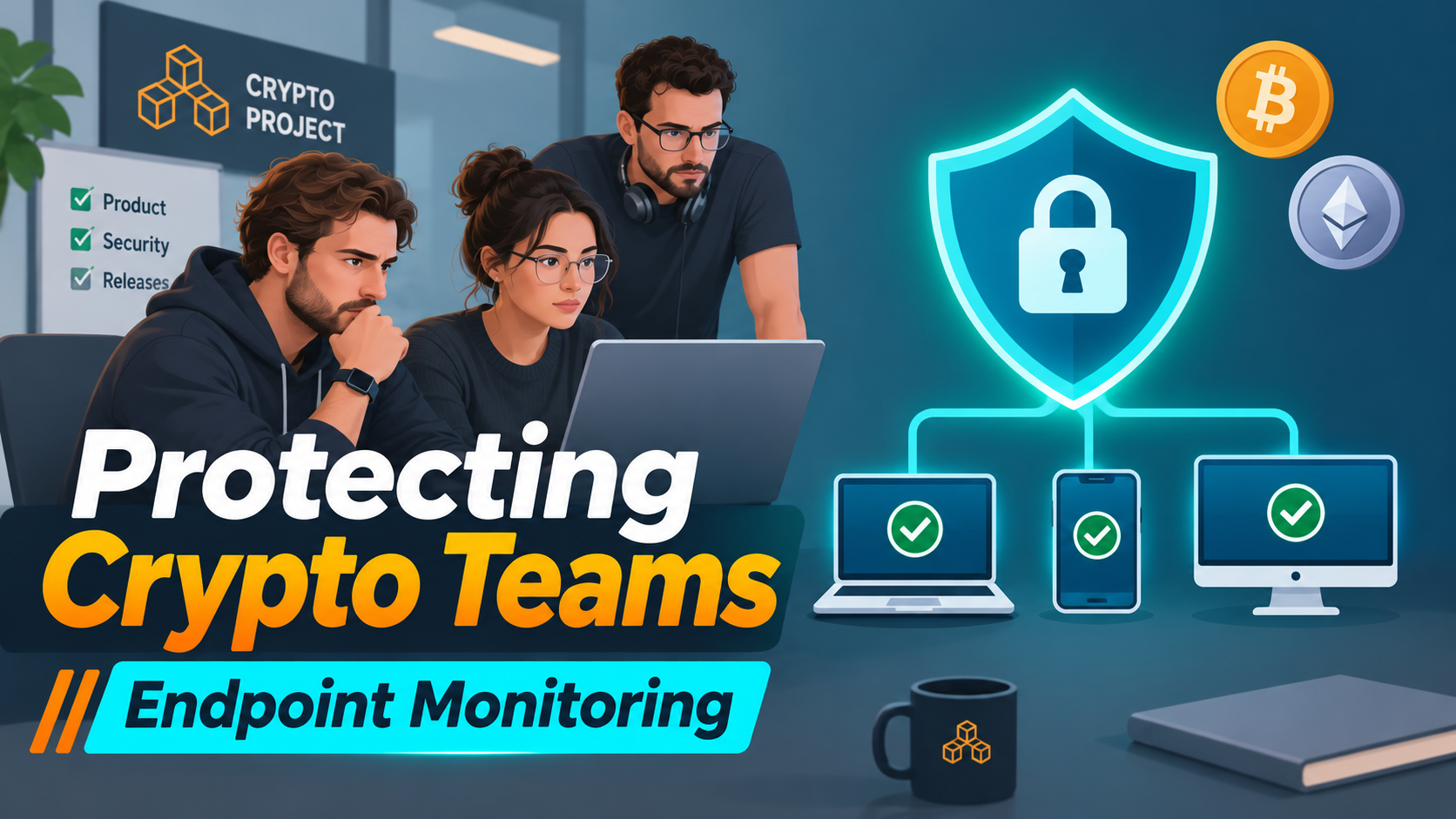
Most security advice for crypto teams stops at the wallet. Use a hardware device, verify the contract address, never share the seed phrase. That advice is sound, but it skips the machine where all of it happens. The laptop that signs transactions, holds exchange logins and runs the browser extension is the weakest point in most small teams, and it is usually the least watched.
Where the attack actually begins
Attackers rarely break a wallet. They go after the person holding it. A fake recruiter, a cloned airdrop page or a tampered developer package gets code onto a computer, and from that point private keys and session tokens are just files and memory. Antivirus built around checking files against known signatures is unreliable here, because the malware used in a targeted campaign is often new enough that no signature exists for it yet.
That is the gap endpoint detection and response was built to close. Rather than asking whether a file matches something already known to be bad, it watches what the machine does: which processes start, what they touch and where they reach out to. Behaviour gives an attacker away even when the file itself looks clean.
What it changes day to day
For a small team, the value of edr security is that something is paying attention when nobody is looking at a dashboard. Heimdal runs its endpoint detection through a single lightweight agent, so one install carries the monitoring alongside prevention layers including Next-Gen Antivirus, Privileged Access Management, Application Control, Ransomware Encryption Protection, Patch & Asset Management and DNS Security, rather than six separate tools to maintain.
The response side is what matters most when something slips through. Once malicious activity is identified, the platform can isolate the device automatically, revoke the user’s access, block the process, quarantine the file and remove the malware. Endpoint activity is correlated against network and user behaviour, so one odd event on a single machine can be read in context instead of being dismissed as noise. For a team spread across time zones, that automation is the difference between a contained incident and a long weekend of damage.
Deciding what to cover first
Not every device carries the same risk. Start with the machines that can move funds or deploy code: the ones with treasury access, signing keys, admin panels and repository credentials. Those deserve monitoring before anything else. Founders and finance leads are usually the most targeted people in a project, and often the ones running personal machines with no central oversight.
From there, the question is less about tools and more about habits. Someone needs to own the alerts, know what normal looks like, and decide in advance what happens when a device is flagged.
Crypto projects spend a great deal on auditing their contracts and very little on the computers belonging to the people who hold the keys. Closing that gap does not require a security team. It requires visibility into the endpoints that matter, and a platform like Heimdal that can act on what it sees without waiting for someone to notice.


