

He also pointed to data centers’ job creation, noting demand for construction workers, energy infrastructure and AI compute hardware.
Moody’s estimates planned capital spending on U.S. data centers at $700 billion this year, rising to between $2.4 trillion and $2.48 trillion through 2030. Globally, spending is expected to reach $7 trillion by the end of the decade.
Any attempt to stifle that spending could have wide-ranging effects. The U.S. economy is already stressed on several fronts, including sticky inflation and rising bond yields.
A recession would matter for crypto traders too, since it typically reduces investors’ appetite for risky assets. Bitcoin proponents hail it as a haven, but it has historically faced selling pressure during broad-based risk aversion. At press time, the cryptocurrency traded near $81,200, down 0.8% since midnight UTC.
BlackRock’s iShares Bitcoin Trust (IBIT) is the world’s largest publicly listed bitcoin fund, with cumulative net inflows of $65.62 billion since its debut in January 2024, according to SoSoValue.
$40 trillion debt
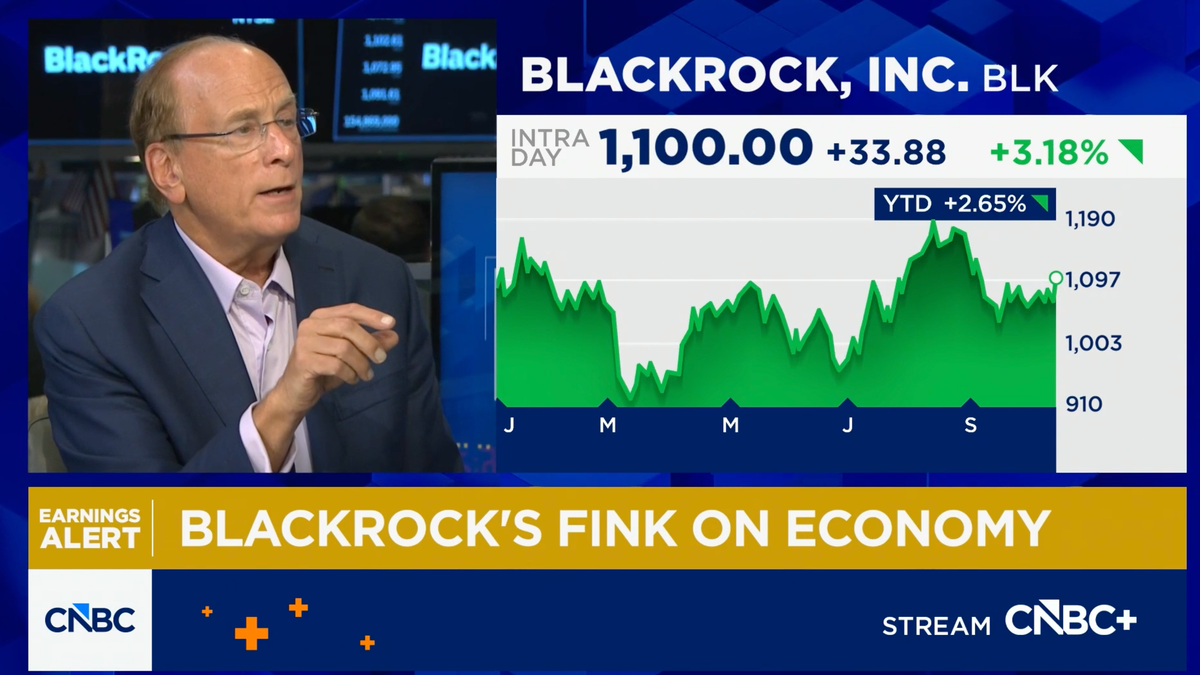
Fink also pointed to government borrowing. “U.S. deficits are starting to have a serious impact,” he said, noting the national debt has gone from $8 trillion in 2000 to $40 trillion in 2026.
“We grew $32 trillion in 26 years,” Fink said. “That’s a massive impact on demand for credit. The government is demanding more and more credit, and bond auctions are getting larger and larger.”


